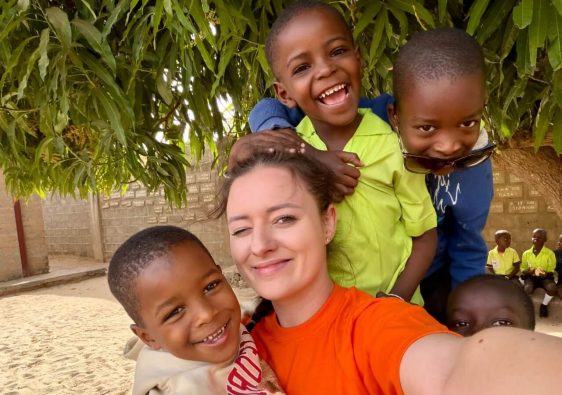
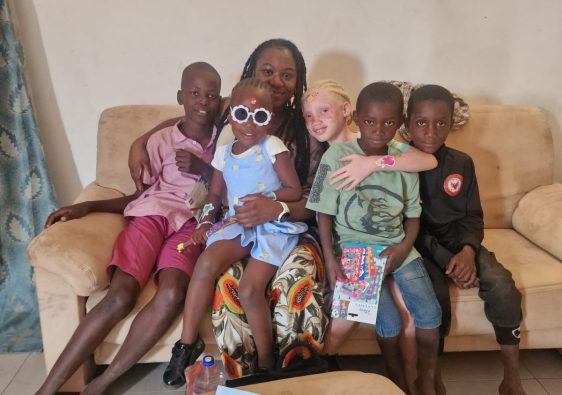
For two weeks in The Gambia, I volunteered at Brufut Upper Basic and Senior Secondary School (BUBSS). I went to learn as much as I could about Gambian life, and to be as useful and productive as possible while I was there.
My first impressions were immediate and vivid: unpaved sandy roads, even in the capital, and classrooms furnished simply with desks, a chalkboard and unglazed windows and no text books .
I started by assisting in a science lesson, then went on to teach the following classes independently. Over the fortnight I covered the timetable of the science teacher I was paired with, teaching Biology and Chemistry to older students, and also taught some General Science to younger students alongside another teacher.

What stood out most was the students. They were bright, engaged, and keen to be challenged. I aimed to make lessons a two-way exchange: asking questions to find the edge of what the class already knew, explaining where the gaps were, then circling back with more questions and short exercises to lock in understanding.
As the days went on, the students grew in confidence – stopping me, probing further, and speaking up more in class. At the same time, I became stronger at building lesson plans, coaching students into new topics, maintaining energy and attention. With no projector, computers, or lab kit, it came down to the essentials: a blackboard, and clear communication.
To keep the content grounded, I pulled examples from students’ lived experience – like groundnut farming, or the colours of rust and copper oxide. I also used a bit of physical humour to make abstract ideas stick (including acting out endocytosis around the room – improv classes finally paying off). Bringing in examples from my own research helped connect the syllabus to real scientific work and made the material feel more alive.
I’m grateful for the support and advice from the teachers who guided me as I learned the rhythms of the school, refined lesson plans, and gained confidence in the classroom. It also took me a little while to get my ear in to Gambian English.
I left with real respect for what the staff at Brufut achieve with the resources they have – and for the students’ drive to make the most of every opportunity.

I spent part of my two-week volunteering time in The Gambia at Kanifing General Hospital, working with the diagnostic laboratory team.
My main focus was upskilling diagnostic scientists in statistical programming and practical data analysis. Together we worked through an anonymised, hospital-generated dataset of 3,600 diabetes patients, exploring patterns in incidence, early onset, and progression of the disease in The Gambia.
Spending time in the lab with the scientists on a day to day basis gave me valuable insights of the constraints staff operate within: limited time and staffing, supply chain uncertainty, equipment limitations, and the daily pressure of delivering results that clinicians can act on. Time spent with the lab head and the head of biochemistry helped me understand how diagnostic products are actually used on the ground – what operators find genuinely helpful, where the pain points are, and what it takes to maintain performance in a resource-constrained setting.
I also visited wards, including the paediatric ward, which put everything into perspective. The work of a diagnostic lab can feel abstract until you meet the people whose care depends on it.
For some of my time there I was spending my mornings at the Diagnostic lab before heading over to the school to take classes and using the evenings to prepare materials for the following day.

I found the opportunity to work in another country and another culture a fascinating and enriching experience. I also took the opportunity to spend a weekend exploring the bird life and fishing villages that make Gambia so beautiful.